AI Gadgets You Didn’t Know You Needed in 2026
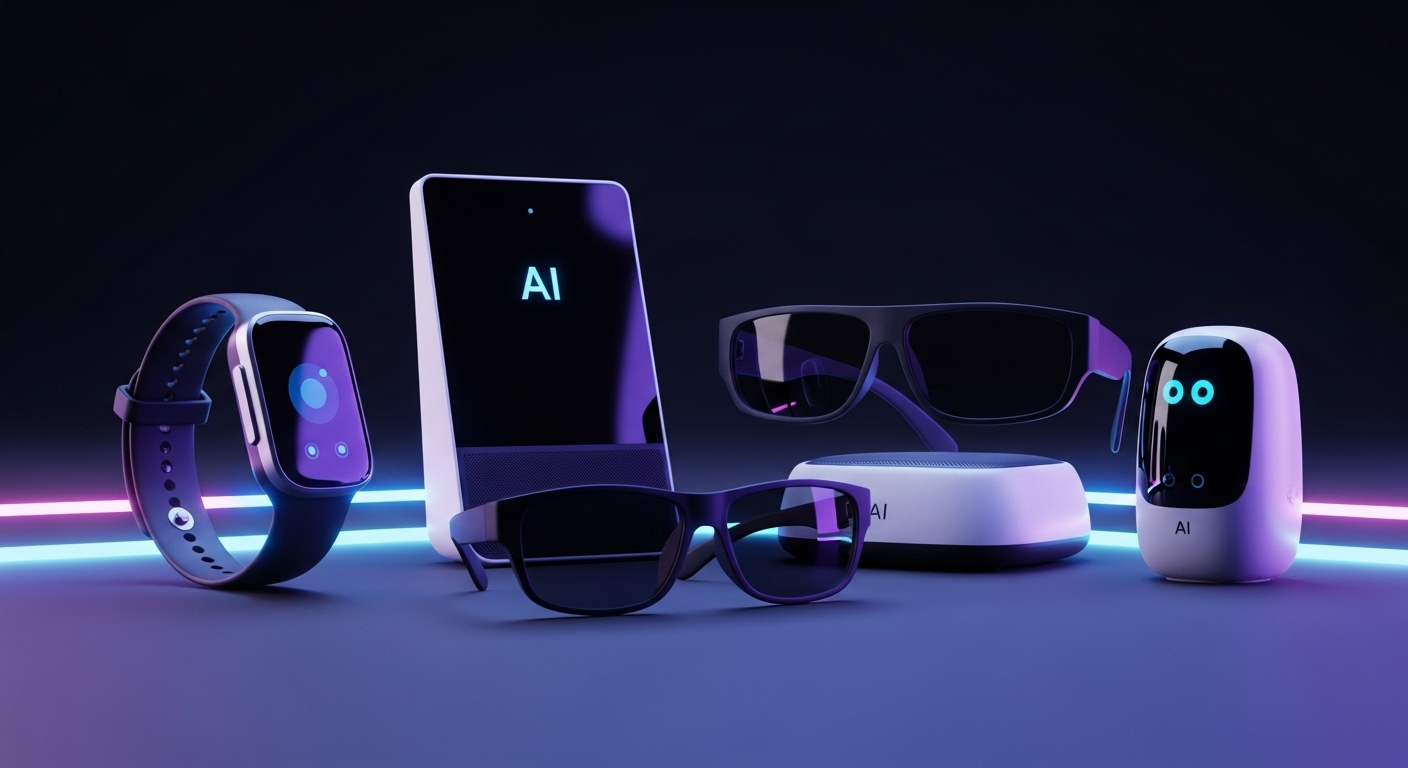
Artificial intelligence is no longer stuck inside your web browser or smartphone apps. It's making its way into the physical world, turning everyday objects into genuinely helpful tools.
Lately, whenever we talk about AI, we're usually talking about software. We type prompts into chat windows, generate images on our laptops, and occasionally shout at voice assistants living inside our phones. But behind the scenes, a major shift is happening in the hardware space. We are officially entering the era of ambient computing.
These aren't just regular electronics with a flashy "AI" sticker slapped on the box to drive sales. We're looking at purpose-built devices equipped with neural processing units (NPUs). They are designed to handle complex tasks in real-time, learn from your daily habits, and operate with a level of independence that older smart home tech simply couldn't pull off.
You might be wondering why you need specialized hardware when your smartphone already does practically everything. The truth is, while phones are great all-purpose tools, they are also massive distraction engines. The newest wave of AI gadgets focuses entirely on utility. They remove the screen from the equation, letting you interact with technology in a way that feels natural and frictionless. Let's look at a few distinct categories of AI hardware that are quietly becoming essential.
Anyone who spends a significant portion of their week in meetings knows the pain of scrubbing through audio recordings just to find one specific detail. The standard digital voice recorder hasn't changed much in twenty years, but artificial intelligence has completely flipped its usefulness on its head.
Today's AI-powered voice recorders do more than just capture sound. Thanks to advanced natural language processing chips built right into the metal, these incredibly thin gadgets can transcribe multi-speaker conversations with shocking accuracy—even if you're sitting in a noisy coffee shop. But the raw text is just the beginning.
What makes these little devices indispensable is how they organize information. The moment a meeting ends, the device digests the transcript and spits out a perfectly formatted summary. You get bulleted action items, a log of key decisions, and a list of who is responsible for what. By taking the manual labor out of note-taking, you are free to actually participate in the conversation without worrying about missing a crucial detail.
The real magic of AI hardware is getting our attention back. When a small device in your pocket handles the memorization and formatting, you can focus entirely on creative problem-solving and connecting with the people in the room.
We've all tried sleep trackers. Usually, you wake up, check your wrist, and look at a graph confirming that you slept terribly. It’s interesting data, but it doesn't actually help you sleep better the next night. That is where ambient sleep optimizers change the game.
Instead of wearing a clunky watch to bed, these devices usually sit quietly on your nightstand or slide right under your mattress. They rely on radar, acoustic sensors, and thermal imaging to track your breathing, tiny movements, and body temperature. Once they have that data, they take action.
By talking to your home's smart ecosystem, an AI sleep optimizer adjusts your room in real-time. If it notices your core temperature rising—which often pulls people out of deep sleep—it quietly tells your smart thermostat to drop the room temperature by a degree or two. If a loud truck drives by outside, it dynamically shifts the frequency of its white noise generator to mask the sound. Over time, it learns your specific biological rhythms to curate the perfect sleep environment.

Trying to communicate in a language you don't speak usually involves awkwardly passing a phone back and forth, tapping a screen, and hoping the translation app didn't misunderstand you. Dedicated AI pocket companions are built to completely eliminate that friction.
These highly portable gadgets usually feature a simple push-to-talk button and a wide-angle camera. Because they are hardwired directly into massive language models, the latency is almost non-existent. You press the button, speak naturally, and the device instantly relays your message out loud with surprisingly natural intonation. It makes real-time, cross-cultural conversations feel fluid rather than forced.
Their visual capabilities are equally impressive. If you point the camera at a confusing transit map in a foreign country or a broken part under your sink, you can simply ask the device a question. The computer vision AI analyzes what it's looking at, cross-references it with massive databases, and feeds the answer straight into your ear. It’s remarkably close to having an expert standing right next to you.
Slouching at a desk is a modern epidemic, and buying an expensive ergonomic chair won't fix the problem if you still hunch over your keyboard. We need active correction, not just passive support.
AI-driven posture wearables offer a massive step forward for daily physical health. These tiny trackers magnetically clip to your shirt and spend the first few days simply observing. They use machine learning to map out your unique skeletal structure and figure out your natural range of motion.
Once they understand your baseline, the AI gets to work. It knows the difference between you leaning forward to grab a coffee cup and you sinking into a damaging, sustained slouch. If it notices you collapsing your shoulders every day at 3:00 PM when you get tired, it sends a gentle vibration to remind you to engage your core. It's essentially personalized physical therapy driven by your own data.
With nearly every tech brand slapping an "AI" label on their latest products, it pays to be a bit skeptical. A toaster doesn't need a neural network to make good bread. When you're thinking about adding AI gadgets to your daily routine, keep these three principles in mind:
Look for Friction Reduction: The best gadgets are the ones you hardly touch. If a device requires you to constantly tweak settings in a mobile app or calibrate sensors every week, it's failing. Good intelligent hardware runs quietly in the background, intervening only when it can actually save you time or effort.
Prioritize On-Device Processing: Processing power has shrunk dramatically in recent years. Seek out gadgets that do their heavy lifting "on the edge"—meaning the AI calculations happen on the device's own chip, rather than being beamed up to a cloud server. This makes the gadget faster, allows it to work without Wi-Fi, and keeps your personal data much more secure.
Evaluate the Problem, Not the Tech: It’s incredibly easy to buy something just because the underlying tech sounds cool. Instead of asking what a new gadget can do, ask yourself what specific annoyance it removes from your day. If it perfectly solves a problem you don't actually have, you'll stop using it within a month.
Not usually. The whole point of modern AI hardware is to ditch the steep learning curves we're used to with traditional electronics. Many of these devices use voice-first setups. Instead of digging through five layers of menus, you just talk to the device, tell it your preferences, and it configures itself. They are built to adapt to you, not the other way around.
It really depends on what the device is doing. Gadgets that need to answer complex questions (like visual assistants) usually need the internet to access larger cloud databases. However, things like smart recorders, sleep trackers, and posture wearables often use edge computing. They have their own dedicated chips inside, allowing them to process audio and track data perfectly fine offline.
Phones are built to do a hundred different things, which means they aren't perfectly optimized for any one specific task. Plus, unlocking your phone to use an app exposes you to notifications, messages, and endless distractions. Dedicated hardware gives you physical buttons, better microphones, and a focused experience. You get the job done faster, and then you put the device away.
We are standing at a really interesting crossroads in consumer tech. The glowing screens that have dominated our lives for the past couple of decades are starting to give way to technology that simply blends into our surroundings. These AI gadgets are just the early pioneers of a movement toward hardware that anticipates our needs and works autonomously.
The goal here isn't to clutter your life with more electronics. By handing off rote tasks, note-taking, and environmental controls to smart hardware, you actually free up mental space. The ultimate promise of AI gadgets is that they will make technology fade into the background, leaving us with more time and energy for the things that actually matter.