Why AI Scams Are Rising in the United States
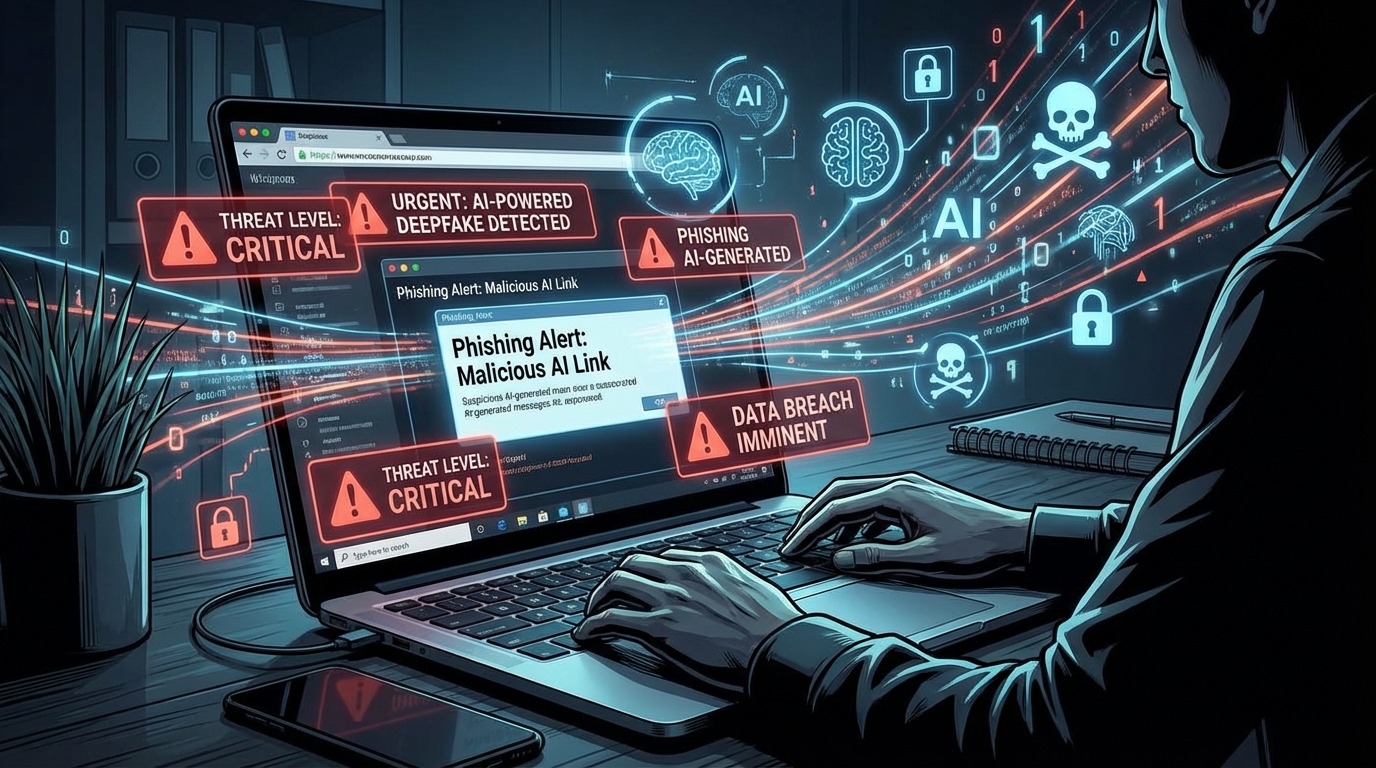
The landscape of online communication has undergone a profound transformation in recent years, largely driven by rapid advancements in artificial intelligence. While these technological innovations have introduced incredible tools for productivity, creativity, and global connectivity, they have simultaneously equipped malicious actors with sophisticated new methods for deception. Scammers are increasingly utilizing AI tools to carry out highly convincing fraud schemes, moving far beyond the easily identifiable phishing emails of the past.
Today, the digital environment is fraught with synthetic media, automated conversational agents, and voice cloning software. These tools allow cybercriminals to scale their operations globally while personalizing their attacks to an unprecedented degree. For internet users in the United States, understanding this shift is no longer optional—it is a critical component of modern digital literacy. This article explores the mechanics of AI-powered scams, why they are proliferating across the country, and what individuals can do to safeguard their personal and financial information.
AI-powered scams represent a sophisticated evolution in cybercrime. Traditional scams often relied on basic psychological manipulation, casting a wide net with generic messages in the hopes that a small fraction of recipients would fall victim. In contrast, an AI scam utilizes machine learning models, natural language processing, and generative adversarial networks (GANs) to automate and refine the fraudulent process.
At their core, these scams use artificial intelligence to synthesize realistic human communication. Scammers leverage large language models to draft culturally accurate, grammatically perfect emails and text messages that easily bypass traditional spam filters. Furthermore, they use deepfake technology to alter video streams or generate entirely fabricated imagery. Perhaps most alarmingly, they employ audio generation software to clone the voices of real people, requiring only a few seconds of publicly available audio to create a digital voice double.
By automating the data collection and communication phases of a scam, artificial intelligence allows bad actors to operate with a level of efficiency and psychological precision that was previously impossible. They can simultaneously target thousands of individuals with highly personalized narratives, increasing the overall success rate of their fraudulent campaigns.
The United States has seen a sharp, disproportionate rise in AI-enabled scams compared to many other regions. Several intersecting structural and societal factors contribute to this growing vulnerability.
Over the past few years, the barrier to entry for utilizing advanced artificial intelligence has practically vanished. Open-source machine learning models and affordable, subscription-based generative AI platforms are readily accessible to the general public. While these tools have legitimate use cases, their open nature means that scammers no longer need deep technical expertise to deploy sophisticated deepfakes or automated communication networks.
Americans are highly integrated into the digital economy, actively utilizing social media, professional networking sites, and digital banking platforms. This widespread online presence results in massive amounts of publicly accessible data. Scammers scrape public social media profiles to harvest audio clips, video snippets, relationship data, and personal details. This wealth of information serves as the foundational training data necessary for AI systems to generate convincing, targeted attacks.
The United States possesses a high concentration of wealth and an economy heavily reliant on digital, frictionless transactions. The normalization of instant peer-to-peer payment applications, cryptocurrency exchanges, and online banking creates an environment where funds can be transferred irrevocably in seconds. Scammers target U.S. residents because the potential financial yield per successful attack is statistically higher, and the digital infrastructure facilitates immediate asset liquidization.
As the underlying technology evolves, so do the specific tactics employed by malicious actors. Below are several of the most prevalent AI-driven scams currently affecting users.
One of the most emotionally manipulative AI frauds is the modern iteration of the grandparent scam. Scammers locate a brief audio clip of a younger family member—often pulled from a public social media video—and use AI to clone their voice. They then call an older relative, usually late at night, claiming to be the family member in distress (e.g., arrested, in a car accident, or stranded overseas). The synthesized voice pleads for immediate financial assistance, exploiting panic and familial bonds to bypass logical scrutiny.
In the corporate sector, Business Email Compromise (BEC) has been upgraded with deepfake technology. Scammers generate highly realistic audio or video of a company executive and use it during virtual meetings or via voicemail. The synthesized executive will urgently instruct a subordinate in the finance department to wire funds to an external vendor, which is actually an account controlled by the fraudsters.
Traditional phishing emails were historically identifiable by poor grammar, spelling errors, and awkward phrasing. Today, generative AI models can write flawless, highly persuasive emails tailored to the specific industry, job title, or recent activities of the target. These emails often convincingly mimic trusted institutions, such as banks, government agencies, or software providers, tricking users into clicking malicious links.
Romance scams and cryptocurrency investment frauds (often referred to as "pig butchering" scams) now frequently employ AI chatbots. These automated agents can maintain simultaneous, long-term conversations with hundreds of victims across dating apps and social media platforms. The AI builds artificial emotional intimacy over weeks or months before eventually introducing a fraudulent investment opportunity or requesting emergency funds.
Understanding the underlying mechanics of artificial intelligence helps demystify why these modern scams are so difficult to detect. Primarily, AI enhances fraud through three mechanisms: natural language processing, machine learning, and generative capabilities.
Natural Language Processing (NLP) allows computers to understand, interpret, and generate human language in a way that is meaningful and contextually appropriate. When applied to scams, NLP ensures that the tone, vocabulary, and syntax of fraudulent messages perfectly match what the victim expects. If a scammer is impersonating a legal professional, the AI will utilize correct legal terminology; if impersonating a teenager, it will appropriately mimic modern slang.
Machine learning algorithms enable scammers to process vast datasets—such as breached databases or social media scrapes—to identify the most lucrative targets. These algorithms can build psychological profiles, determining the exact time of day a person is most likely to check their email, or what types of urgent subject lines have the highest historical open rates.
Finally, generative AI operates at speeds human operators cannot match. A scammer no longer needs to spend hours crafting a single, personalized attack. They can input a target's name, workplace, and recent social media activity into a generative model, and within seconds receive a custom-tailored, multi-stage scam script that is highly believable and contextually accurate.
Despite the sophistication of these technologies, there are still practical signs and anomalies that individuals can watch for to protect themselves:
Mitigating the risk of AI-enabled fraud requires a combination of digital hygiene and a shift toward a "zero-trust" mindset regarding digital communications.
First and foremost, establish a family safe word. This should be a unique word or phrase known only to close friends and family members. If you receive a distress call from a loved one, ask for the safe word. An AI voice clone will not know it, instantly revealing the fraud.
Second, prioritize independent verification. If you receive an urgent email from your bank or a panicked text from a friend, do not reply directly to that message or use the phone number provided in the communication. Instead, hang up or close the message, look up the official contact number for the institution independently, or call the friend back on the number you already have saved in your phone.
Third, limit public digital data. Review the privacy settings on all social media accounts. Limit who can view your photos, videos, and professional connections. By restricting access to your biometric data (your face and voice) and your social graph, you deprive scammers of the training data needed to target you.
Finally, always enable multi-factor authentication (MFA) on all financial and personal accounts. Even if an AI-generated phishing scheme successfully tricks you into revealing a password, MFA provides a critical secondary barrier that automated systems struggle to bypass.
An AI voice clone is a synthetic, computer-generated replica of a specific person's voice. Software analyzes a short audio sample of the target—sometimes as brief as three seconds—to learn their pitch, tone, and speech patterns. The scammer can then type text into a program, and the AI will read it aloud in the exact voice of the targeted individual.
Generally, AI itself cannot magically guess a 2FA code. However, AI-driven phishing sites are becoming highly interactive. A scammer might use an AI bot to direct you to a fake website that captures your password, and then immediately prompts you for your 2FA code in real-time. If you enter it, the bot logs into your actual account. This is why hardware security keys or authenticator apps are safer than SMS-based 2FA.
While anyone can be targeted, elderly individuals are frequently targeted for voice-cloned "grandparent scams." Additionally, corporate employees in finance or human resources are prime targets for deepfake executive impersonation, as they have the authority to authorize large fund transfers.
Refund policies vary widely depending on the institution and the method of transfer. Generally, if a scammer fraudulently accesses your account, banks may offer protection. However, if an AI scam successfully convinces you to willingly authorize a wire transfer or cryptocurrency payment, banks often consider the transaction authorized and are highly unlikely to refund the lost money.
Scammers typically harvest voice data from publicly accessible sources. This includes videos uploaded to platforms like TikTok, YouTube, or Instagram, professional podcasts, company website introductions, or even by placing a "silent" phone call to you and recording your greeting when you say "Hello, who is this?"
To maximize safety, it is best to let unknown numbers go to voicemail. If the call is legitimate and important, the caller will leave a message. Answering unknown numbers not only confirms to automated systems that your line is active, but speaking on the call can provide scammers with the brief audio snippet they need for voice cloning.
Immediately disconnect the communication. Do not engage, argue, or attempt to outsmart the suspected scammer. Document the interaction (take screenshots or note phone numbers), report the incident to the relevant platform or local authorities, and independently contact the person or institution the scammer was attempting to impersonate to verify their safety or account status.
The integration of artificial intelligence into online communication has undoubtedly brought remarkable benefits to society, but it has also initiated a new era of sophisticated cyber threats. The rise of AI scams in the United States highlights a critical turning point in digital security, shifting the focus from simply securing hardware and software to actively protecting our digital identities and verifying human authenticity.
Because these automated, highly personalized scams are designed to bypass traditional security filters and exploit human psychology, technological defenses alone are insufficient. Public awareness, continuous education, and widespread digital literacy are essential. By understanding how AI is weaponized, maintaining a healthy skepticism of unsolicited communications, and implementing strict verification habits, individuals can effectively navigate this evolving landscape and protect themselves against next-generation fraud.