Nearly 1,300 Stores Are Set to Close Across the US in 2026, Here’s the List
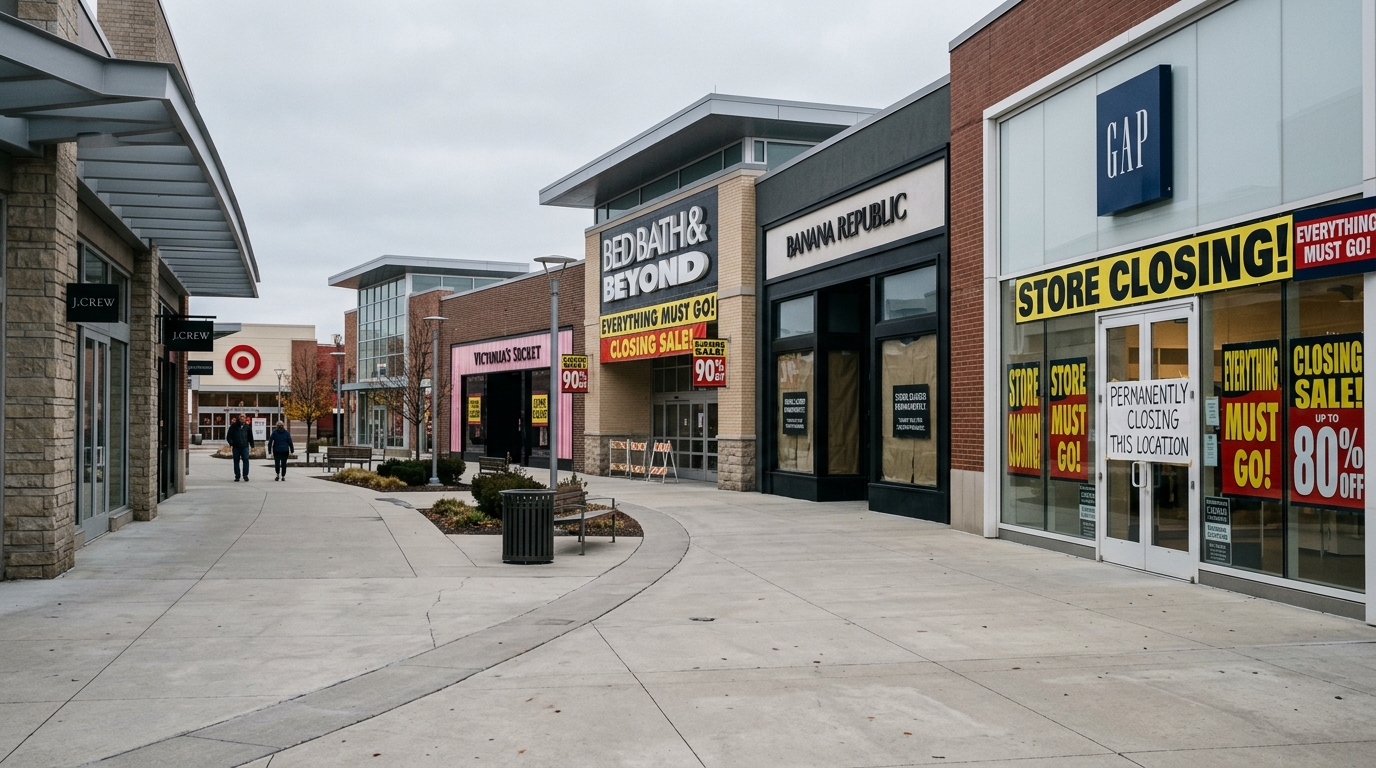
The retail landscape in the United States is undergoing a historic transformation. As we move deeper into 2026, an estimated 1,300 brick-and-mortar store locations are scheduled to permanently close their doors. This massive wave of retail consolidation is reshaping suburban shopping malls, urban centers, and rural commercial districts alike.
For consumers, employees, and the broader economy, this shift is profound. The shuttering of nearly 1,300 storefronts represents not just a change in how Americans buy their everyday goods, but a fundamental restructuring of commercial real estate and local employment ecosystems. While the headline number seems alarming, retail analysts suggest this is less of a "retail apocalypse" and more of a necessary correction in an industry grappling with rapid technological advancement and shifting consumer expectations.
This comprehensive overview will examine the underlying economic forces driving these closures, detail the sectors and major corporations reducing their physical footprints, and explore what the future of shopping looks like in a post-2026 economy.

The decision to close a retail location is rarely driven by a single factor. Instead, the projected closures for 2026 are the result of a complex web of economic pressures, operational challenges, and changing societal habits. Several core factors are simultaneously squeezing the profit margins of traditional retailers.
Rising Operational and Real Estate Costs: Inflationary pressures over the last few years have substantially increased the cost of doing business. Commercial rent, utility expenses, and logistics costs have soared. When a store's lease comes up for renewal in 2026, many corporate boards are finding that the new rental rates mathematically prohibit the location from remaining profitable.
Labor Market Dynamics: The retail industry has historically relied on a vast pool of entry-level labor. However, shifts in the workforce have driven wages higher. While higher wages benefit workers, retail corporations operating on razor-thin margins have struggled to absorb these payroll increases without passing the costs onto consumers—who are already highly price-sensitive.
Changes in Consumer Behavior: The modern consumer prioritizes convenience, speed, and value over the traditional in-store browsing experience. With household budgets tightening, shoppers are increasingly loyal to prices rather than specific brick-and-mortar brands. This behavior heavily favors ultra-discount retailers and online marketplaces over mid-tier department stores.
The companies shedding the most physical real estate this year fall into a few distinct categories. Rather than a total collapse of retail, we are witnessing strategic pruning. Corporations are eliminating underperforming locations to free up capital, which is then reinvested into their digital infrastructure or remaining highly profitable flagship stores.
Legacy department stores, which have served as the anchor tenants of American shopping malls for decades, are leading the downsizing efforts. These massive, multi-level stores require high inventory volume and heavy foot traffic to justify their overhead. As mall traffic continues to decline, these sprawling footprints are no longer sustainable.
Another heavily impacted sector is the pharmacy and health retail space. Major national pharmacy chains are undergoing massive restructuring. This is due to a combination of changing prescription reimbursement models, increased competition from mail-order pharmacies, and a pivot toward healthcare services rather than front-of-store retail sales.
While the specific local addresses of all 1,300 closures frequently change as lease negotiations continue throughout the year, corporate filings and retail market analyses give us a clear picture of where the reductions are happening. Here is the breakdown of the sectors and store types making up the 2026 closure list:
| Retail Sector | Estimated 2026 Closures | Primary Reason for Downsizing |
|---|---|---|
| National Pharmacy Chains | ~450 Locations | Restructuring footprints, mail-order competition, shifting to clinical models. |
| Discount & Dollar Stores | ~350 Locations | Over-expansion correction, supply chain costs, shifting lower-income demographics. |
| Apparel & Footwear | ~250 Locations | Direct-to-consumer digital sales, declining mall foot traffic. |
| Department Stores | ~150 Locations | High overhead costs, transition to smaller format neighborhood stores. |
| Specialty Electronics & Home | ~100 Locations | E-commerce dominance in hard goods, preference for home delivery. |
As the data illustrates, pharmacies and discount retailers make up the bulk of the closures. Many of these chains aggressively expanded over the past decade, placing stores merely blocks away from one another. The 2026 closures largely represent a strategy of eliminating this internal cannibalization.

It is impossible to discuss retail store closures without analyzing the profound impact of e-commerce. Online shopping has evolved from a convenient alternative to the dominant method of procurement for millions of American households. Digital platforms offer infinite shelf space, aggressive pricing algorithms, and the ultimate convenience of doorstep delivery.
Furthermore, digital marketplaces have perfected the logistics of the "last mile" delivery, making it possible for consumers to receive goods within hours of clicking a button. This frictionless purchasing environment makes the traditional chore of driving to a store, finding parking, and waiting in checkout lines seem increasingly antiquated.
Retailers are now competing not just with the store across the street, but with global supply chains that deliver directly to the consumer's doorstep. This paradigm shift requires physical stores to offer something digital platforms cannot: immediate gratification, tactile experiences, and expert human customer service.
When a physical store closes, the ripple effects are felt deeply within the surrounding community. The most immediate and visible impact is employment. The closure of 1,300 stores represents the displacement of tens of thousands of retail workers, store managers, and logistics personnel. While some employees may be transferred to other locations, many will be forced to transition into new industries.
Beyond employment, local municipalities suffer from decreased tax revenues. Brick-and-mortar stores contribute significantly to local property and sales taxes, which fund public schools, infrastructure, and emergency services. A vacant big-box store leaves a massive financial gap in a town's municipal budget.
Additionally, the closure of specific types of stores—particularly pharmacies and grocers—can create "retail deserts." In these scenarios, vulnerable populations, including the elderly and those without reliable transportation, lose safe and immediate access to essential medications and household goods.
To survive in this evolving landscape, retail companies are executing aggressive adaptation strategies. The most prominent trend is the shift toward "omnichannel" retail. A successful modern retailer no longer treats its physical stores and its website as separate entities. Instead, they operate as a unified ecosystem.
Physical stores are increasingly being utilized as hyper-local fulfillment centers. Through Buy Online, Pick Up In-Store (BOPIS) programs and curbside pickup, stores are acting as miniature warehouses. This strategy leverages physical real estate to solve the costly problem of last-mile shipping.
Furthermore, major brands are experimenting with "small-format" stores. Instead of a 100,000-square-foot behemoth on the edge of town, retailers are opening 20,000-square-foot locations densely packed with curated, highly localized inventory right in the center of suburban neighborhoods. This reduces overhead while keeping the brand accessible to daily commuters.
Looking past 2026, the physical retail store is not destined for extinction, but rather evolution. The stores that survive and thrive will be those that integrate seamlessly with technology. We can expect to see increased automation, from AI-driven inventory management that predicts local purchasing trends to frictionless checkout systems that eliminate the need for traditional cash registers.
Commercial real estate will also adapt. The classic American shopping mall is already being reimagined. Dead malls are being retrofitted into mixed-use developments that combine smaller retail spaces with residential apartments, medical offices, fitness centers, and entertainment venues. The future of retail is less about mass distribution and more about community integration and experiential shopping.
The closure of nearly 1,300 retail stores across the United States in 2026 marks a pivotal moment in the evolution of commerce. Driven by rising costs, the convenience of e-commerce, and changing consumer priorities, retailers are being forced to make difficult strategic decisions. While the loss of physical storefronts brings real challenges to local economies and the labor market, it also paves the way for a more efficient, digitally integrated, and consumer-focused future. Retail is not dying; it is simply undergoing a rigorous process of modernization.